Protein Reasoning Model
Proteo-R1 / Proteo-R2
Multi-modal Reasoning for Multi-scale Biomolecule Understanding and Design
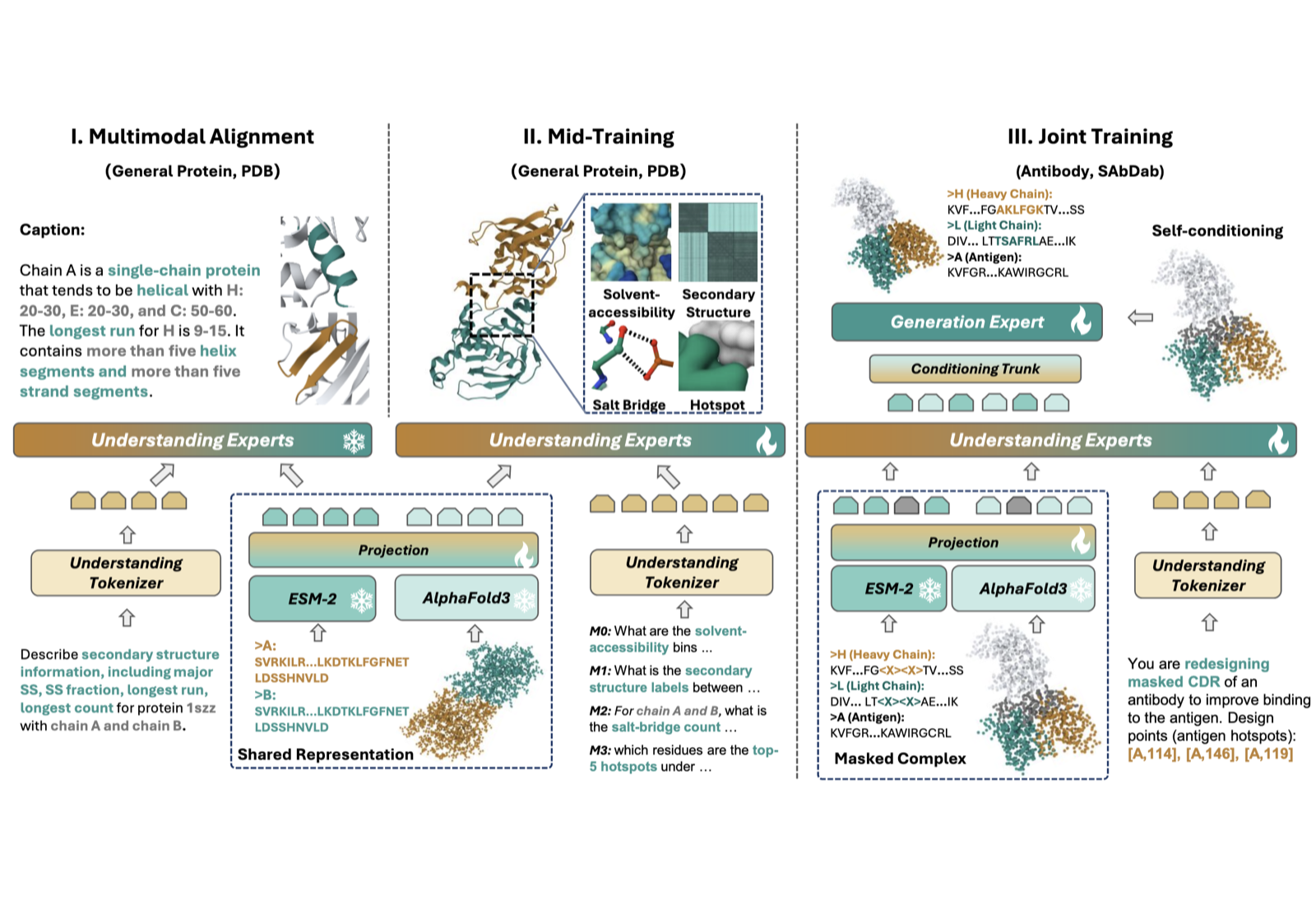
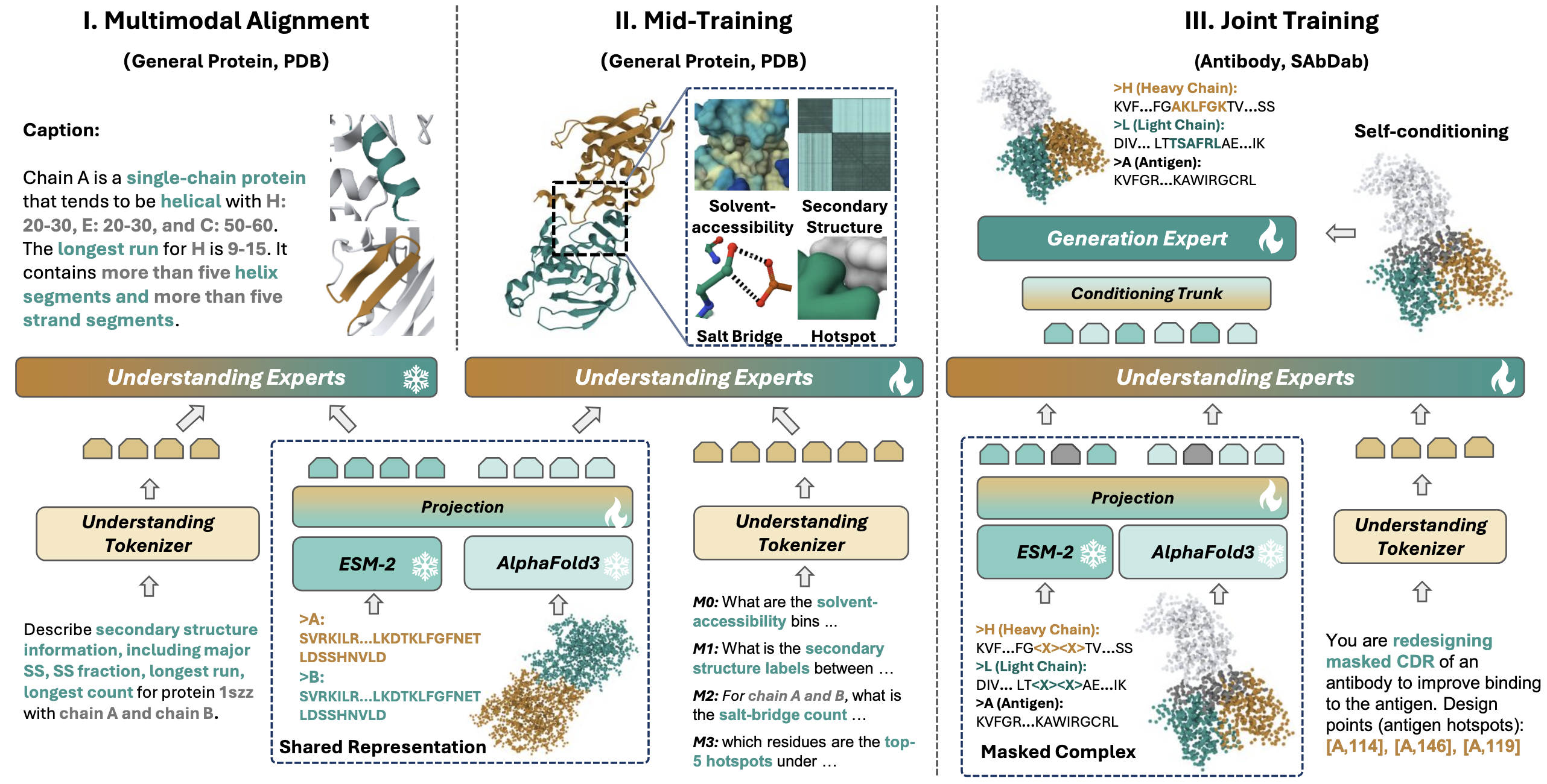
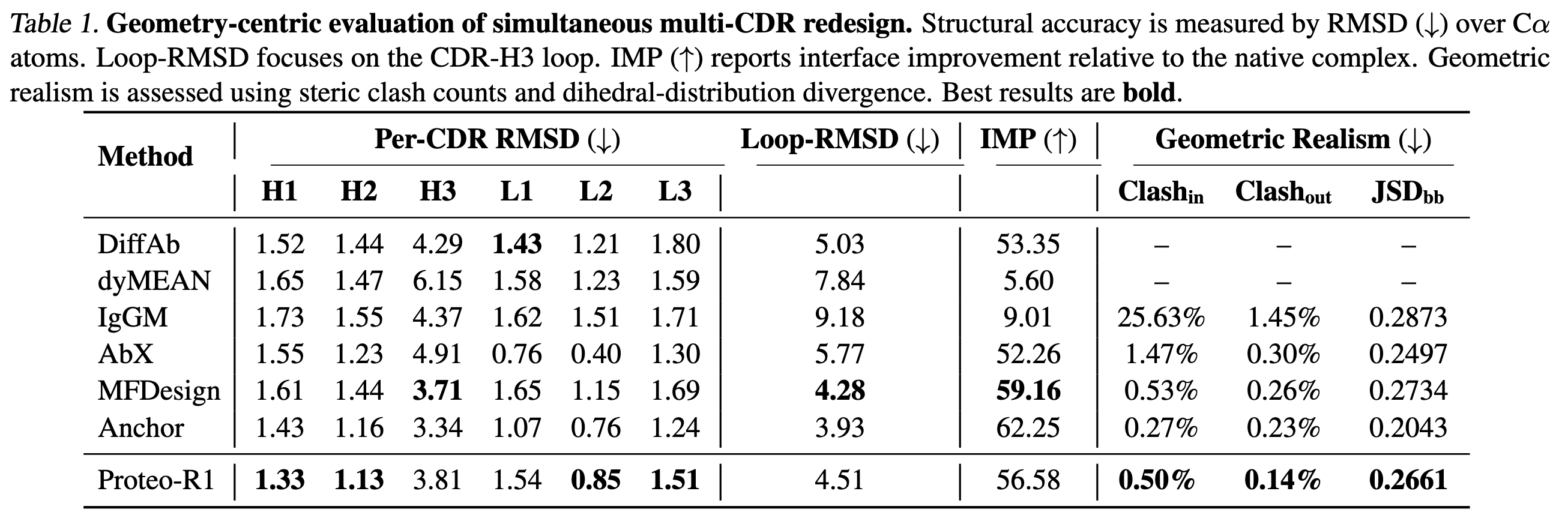
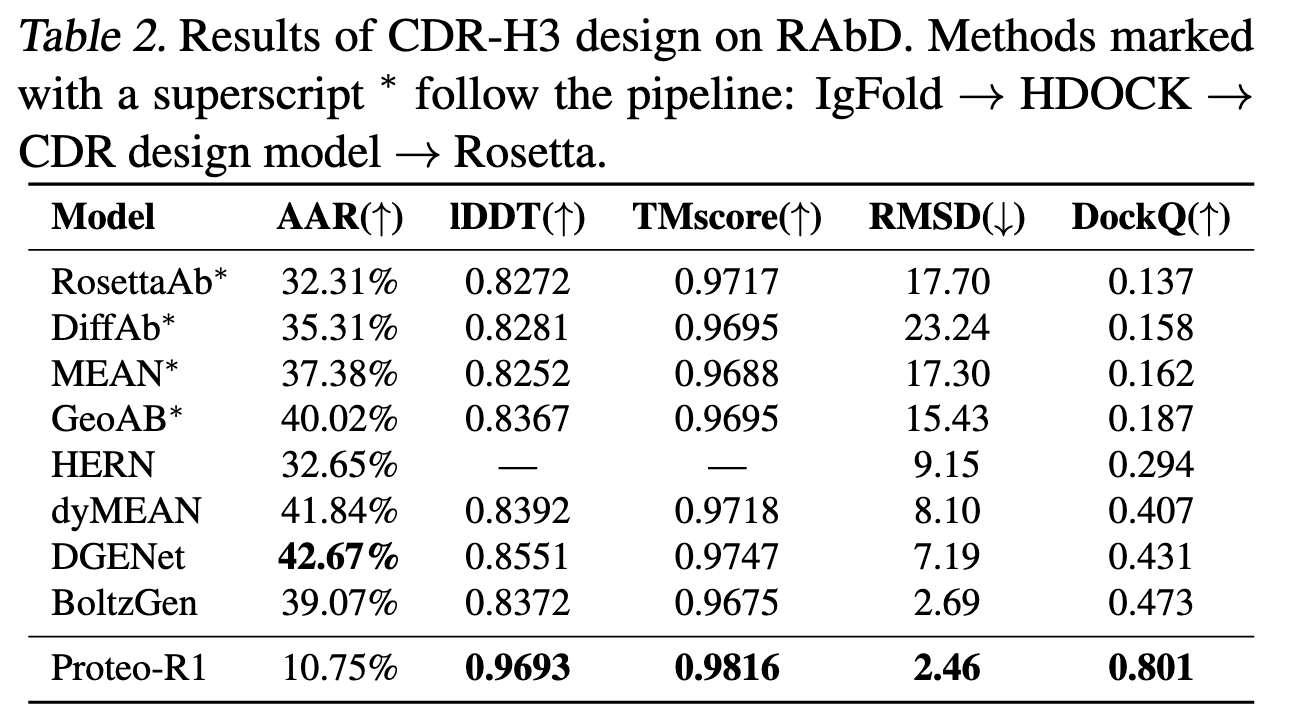
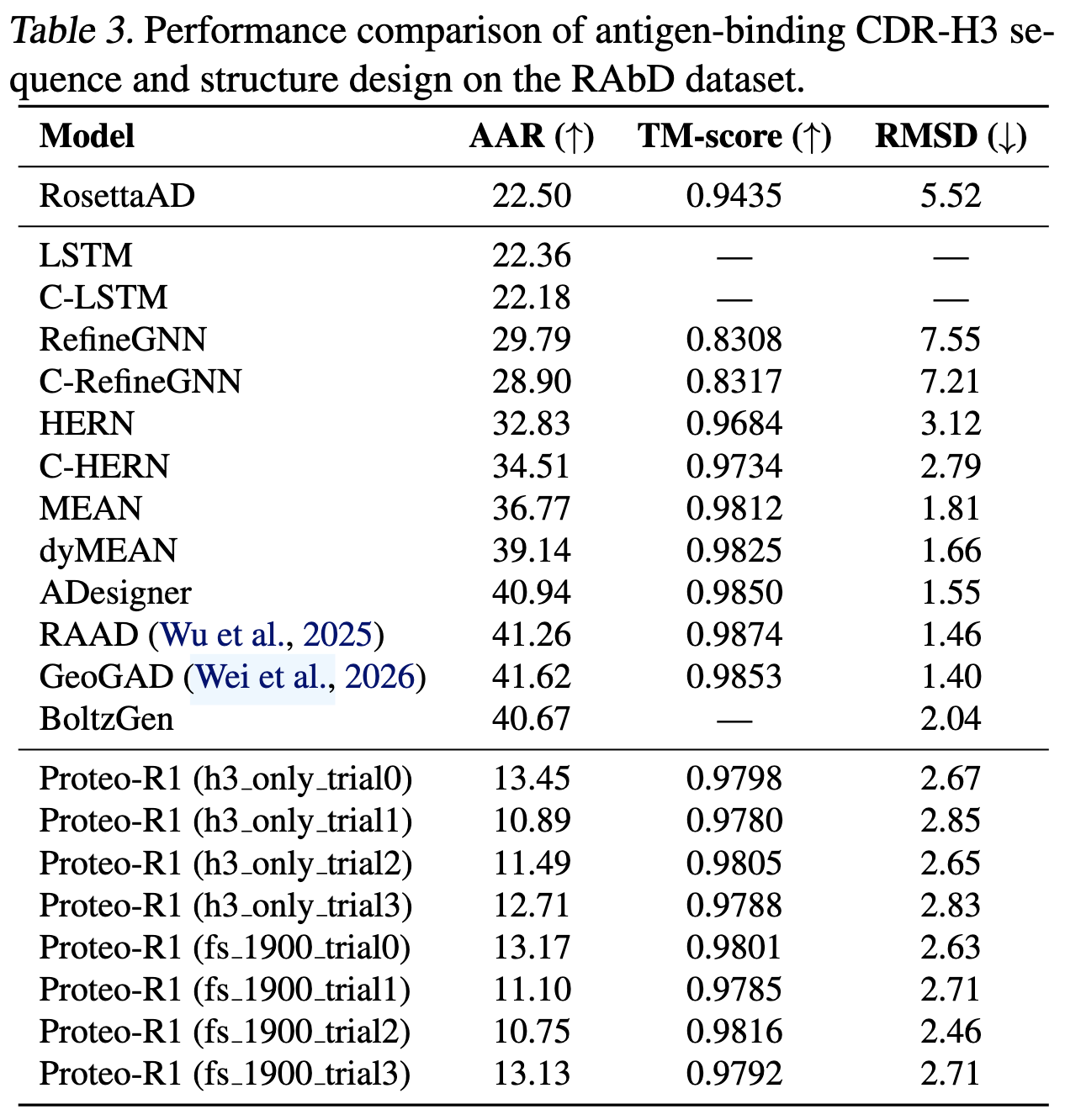
Proteo-R1 and Proteo-R2 explore a reasoning-first direction for protein design. Instead of asking a generative model to directly sample molecules, the system separates molecular understanding from geometric generation: a multimodal reasoning expert identifies important residues, interaction anchors, and design constraints, then a generation expert performs conditional sequence-structure co-design.
Proteo-R1 focuses on de novo antibody CDR design, where residue-level reasoning can make generation more interpretable and controllable. Proteo-R2 extends this line toward enzyme design, with a stronger emphasis on chain-of-thought reasoning data for synthetic protein design and controllable protein engineering.
What It Enables
- Reasoning-guided antibody CDR redesign conditioned on antigen context.
- CoT-style reasoning data for synthetic protein design.
- Enzyme-design reasoning for Proteo-R2.
- Multimodal alignment across protein sequence, structure, and text.
- Explicit residue-level design commitments before geometric generation.
- Conditional sequence-structure co-design through task-specific protein generators.
My Role
My main work is building chain-of-thought reasoning data for synthetic protein design, especially for the Proteo-R2 enzyme-design direction. I also contributed to the broader Proteo-R line of work, with focus on turning multimodal molecular reasoning into controllable design behavior.
Release
Proteo-R1 has been accepted to ICML 2026. Proteo-R2 is currently in progress for enzyme design, and public materials will be added here after release.


