Protein Foundation Model
ProteoCraft
AF3-based hallucination with inference-time scaling for binder and TCR design
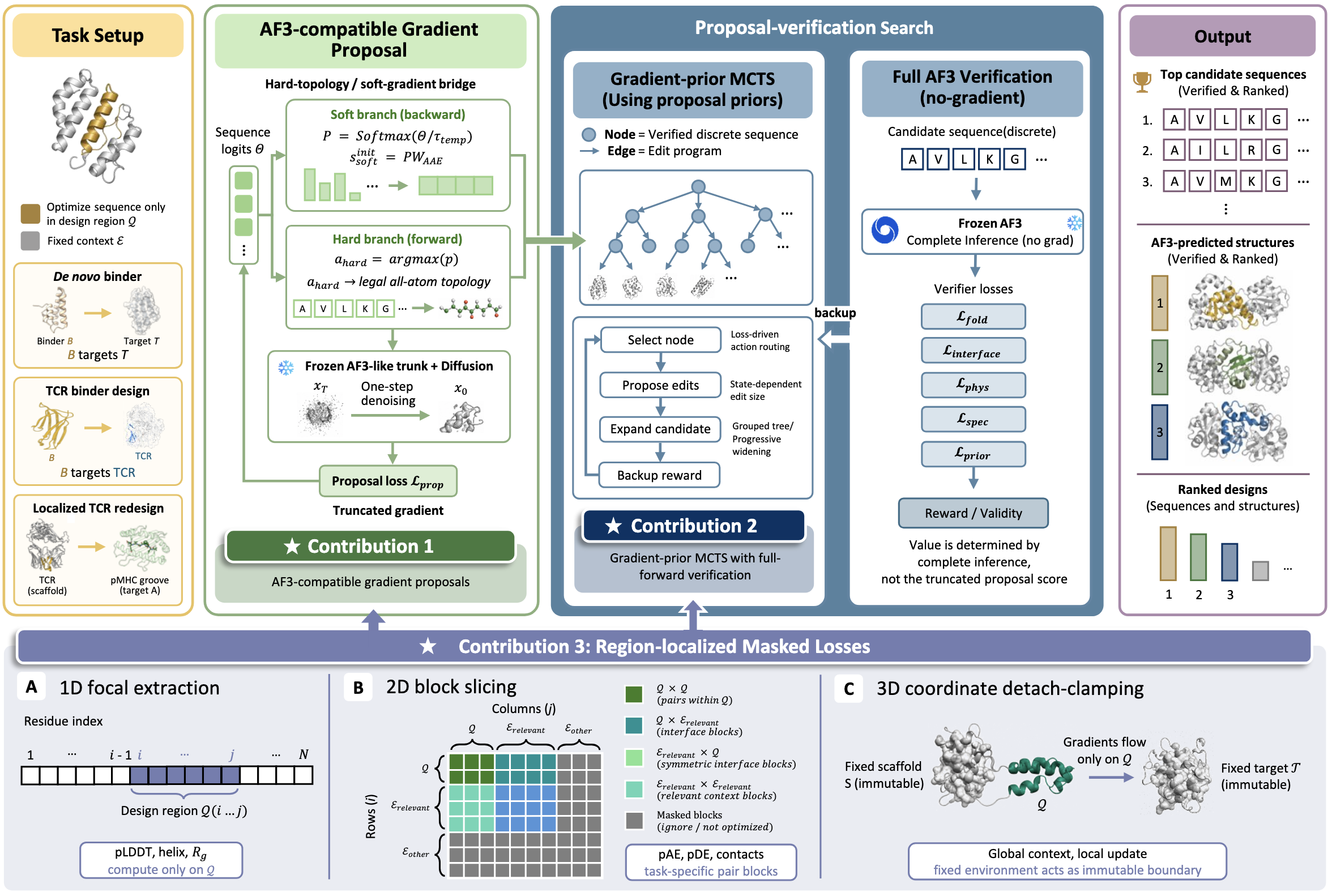
ProteoCraft is a protein foundation-model project for design under frozen diffusion-based structure predictors. It treats protein design as a proposal-verification search problem: truncated diffusion gradients are useful for proposing candidate mutations, but reliable values should come from complete forward prediction on discrete sequences.
The framework is built around a hard-forward / soft-backward sequence bridge, gradient-prior Monte Carlo Tree Search, and region-localized masked losses. This lets the system search over mutable protein regions while keeping the broader molecular context fixed, which is important for binder design, TCR-facing interfaces, and localized CDR or TCR redesign.
What It Enables
- Protein sequence design with AF3-like diffusion structure predictors without training a new model.
- Local mutation proposals from truncated diffusion gradients while preserving legal all-atom topology.
- Full-forward verification of candidate sequences before ranking.
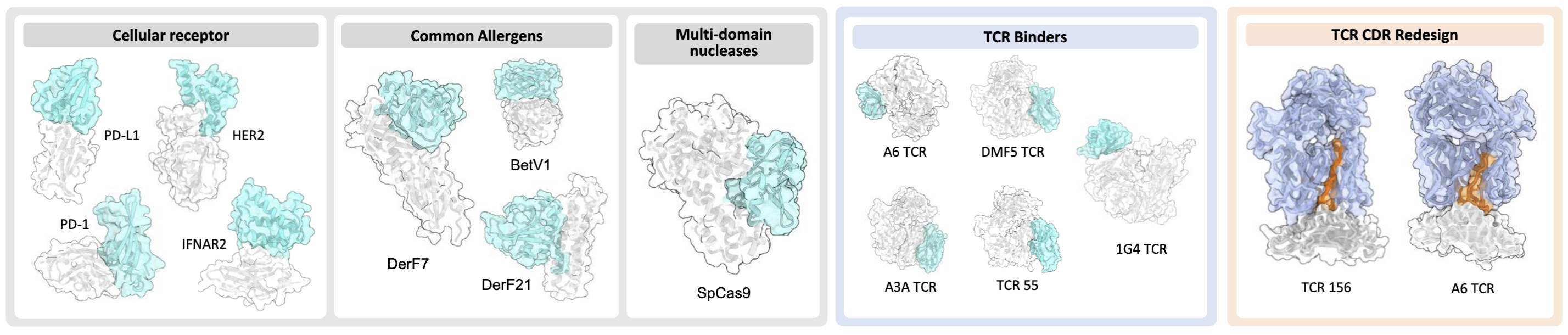
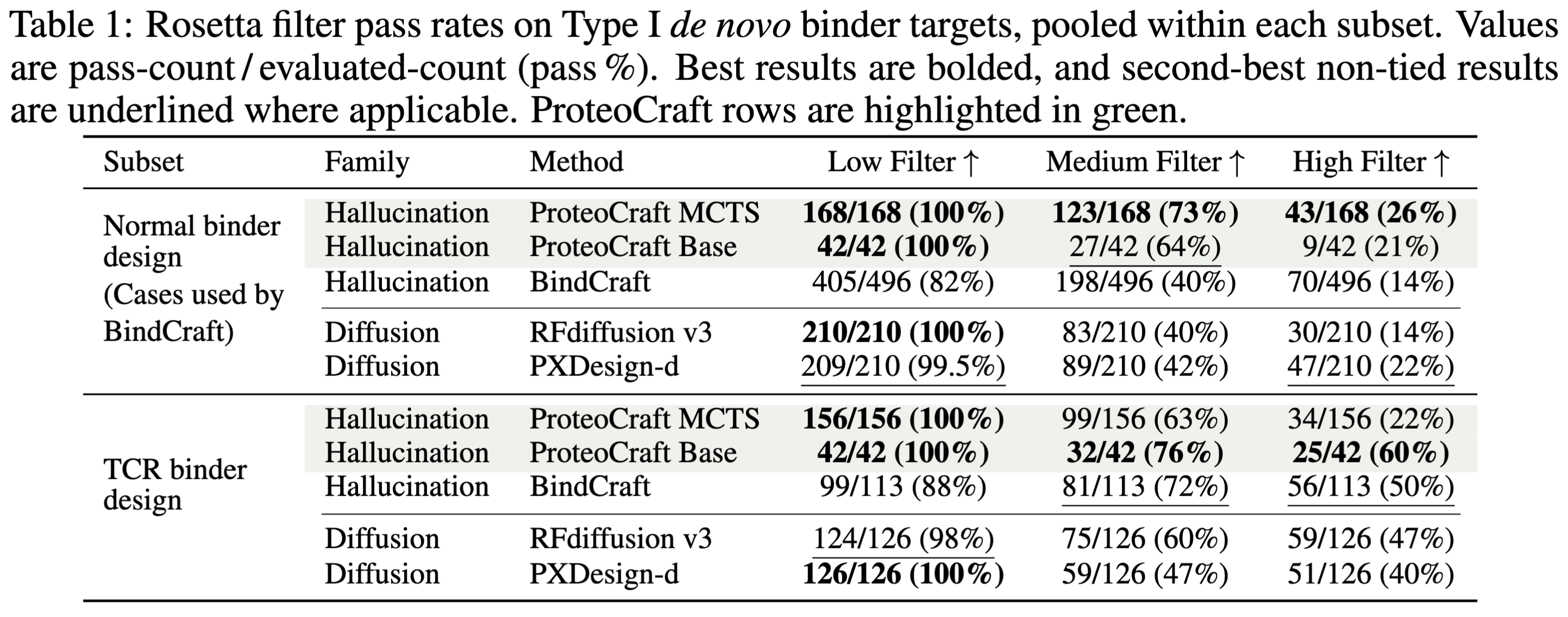
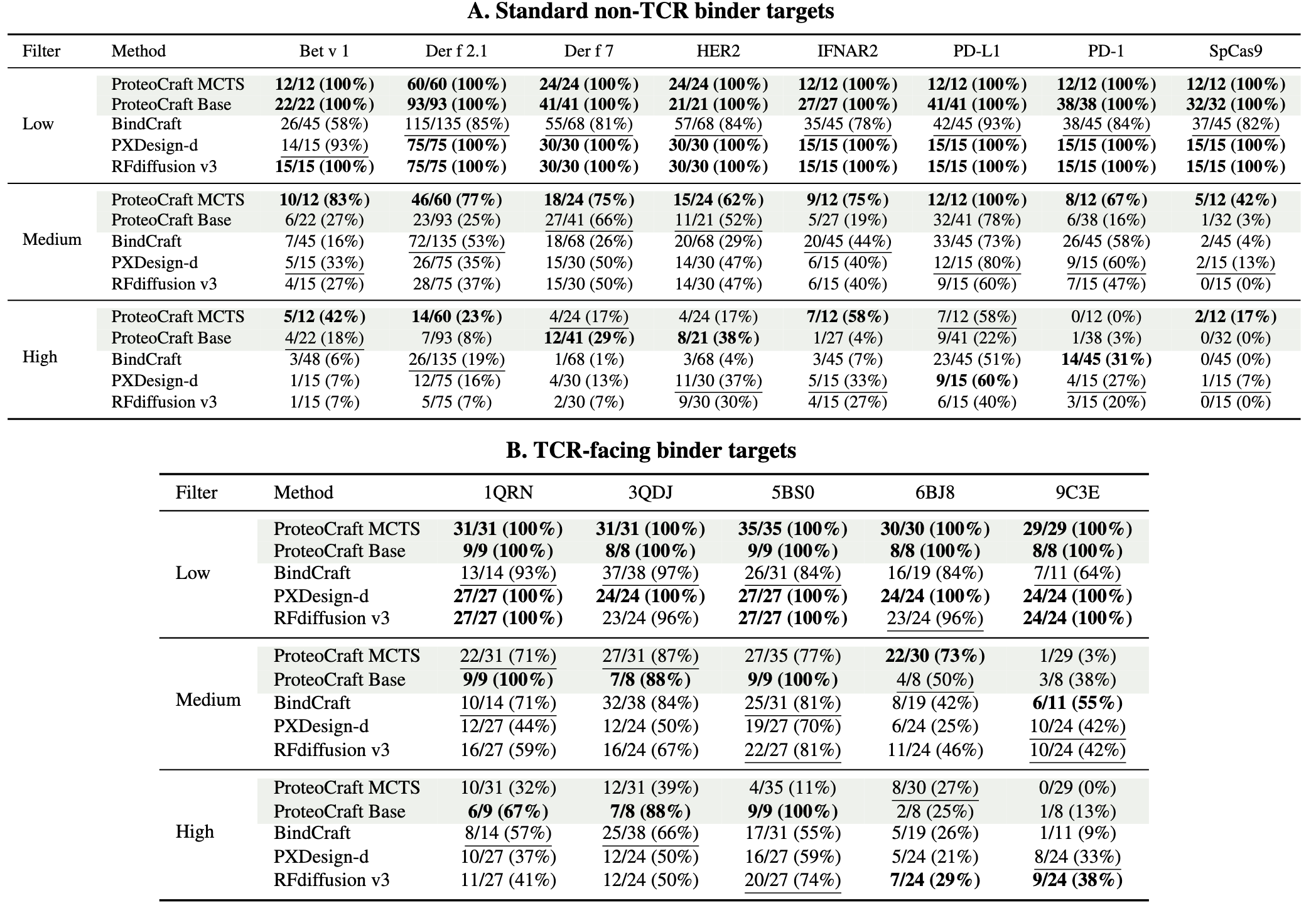
- Search over de novo binders, immune-relevant TCR targets, and localized protein redesign tasks.
- Region-aware losses that optimize designated mutable regions while respecting fixed structural context.
My Role
I am a co-first author on ProteoCraft and worked across the foundation-model formulation, proposal-verification search design, benchmark analysis, figure/story construction, and manuscript development.
Release
The manuscript has been submitted to NeurIPS 2026. Public links, code, and paper materials will be added here after release.


